Panama Mangrove Conservation Action Request (PAMAR)
PANAMA ACTION REQUEST

Launching PAMAR in Panama
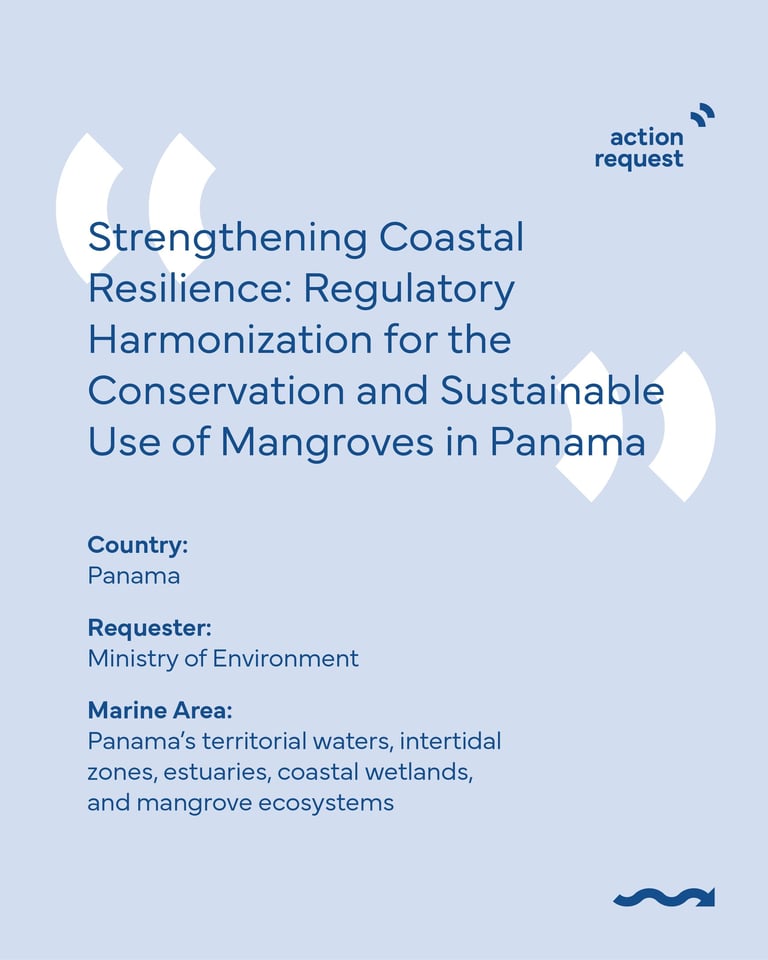
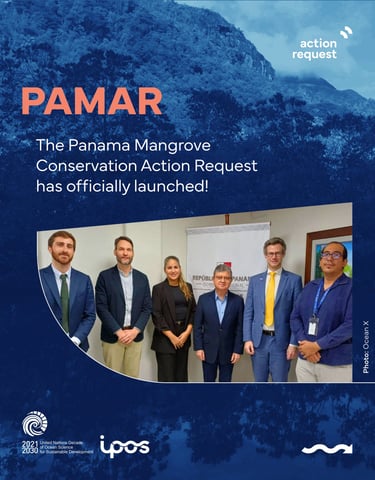
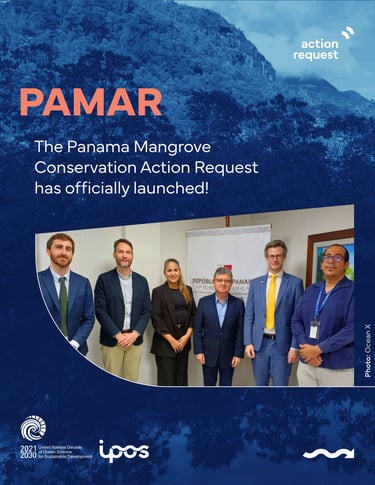
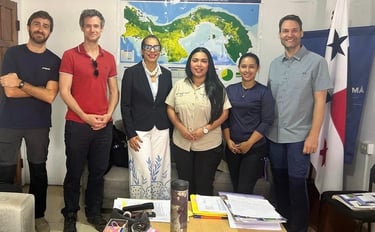
At a kickoff event in Panama, IPOS officially launched the Panama Mangrove Conservation Action Request (PAMAR), in close collaboration with Panama’s Ministry of Environment.
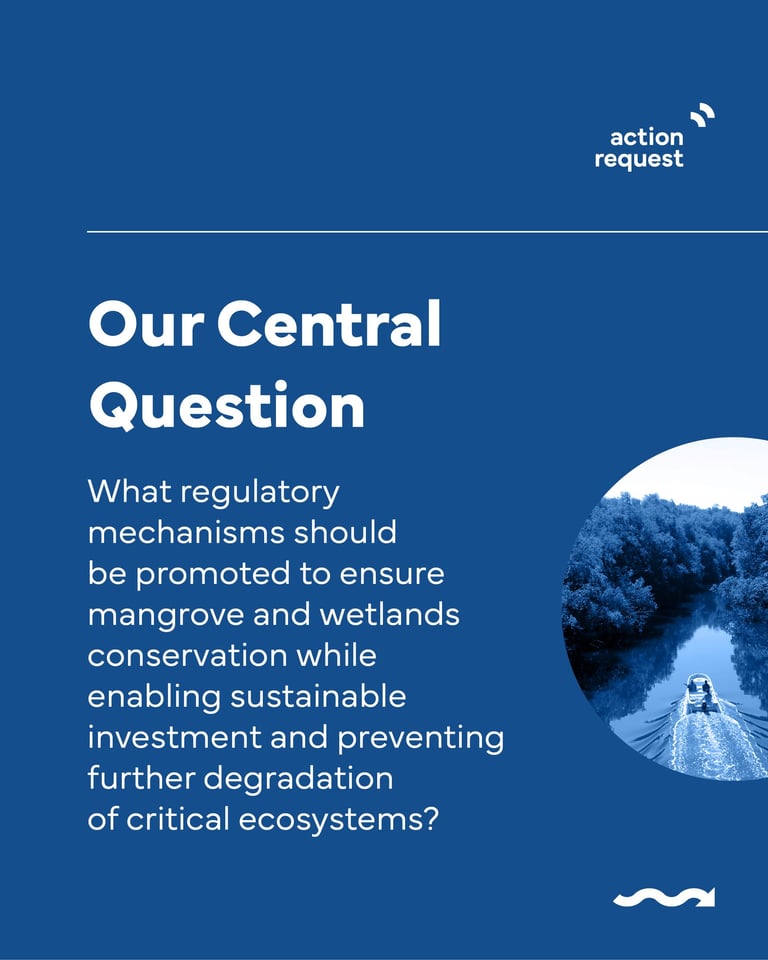
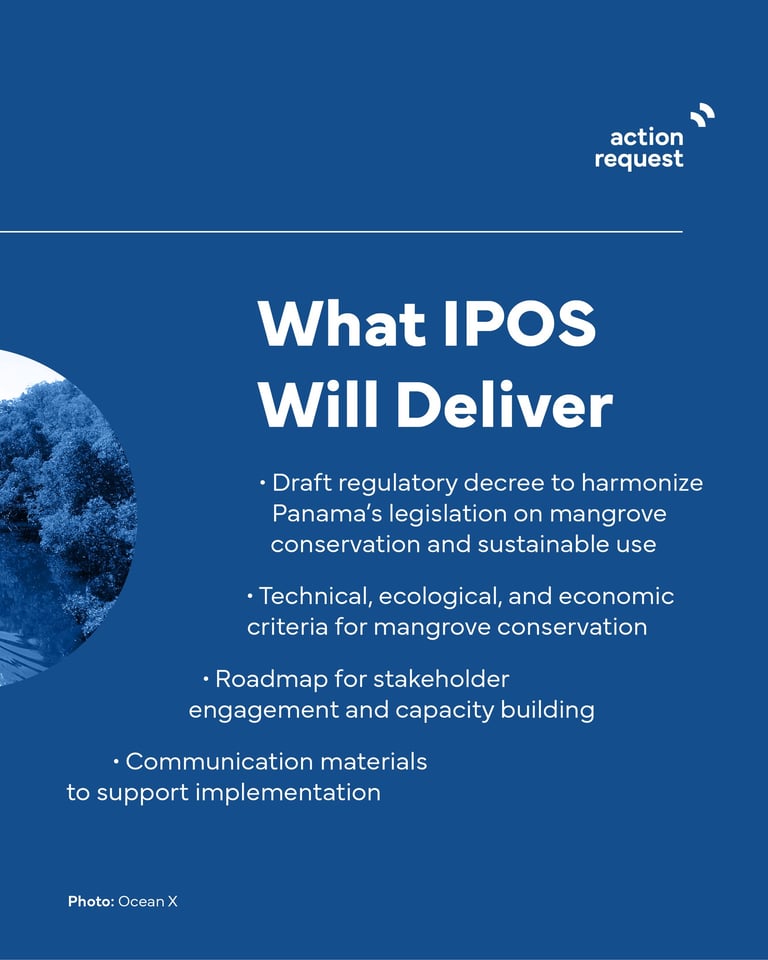
PAMAR is a one-year project that will support Panama in harmonizing its legal framework for the conservation and sustainable use of mangroves, critical ecosystems for biodiversity, climate mitigation, and coastal resilience.
Following the launch, IPOS and the Ministry presented PAMAR to the National Wetlands Committee of Panama, fostering dialogue and forming integral connections across institutions.
Meet the team
Local Facilitator


Mari Castillo
Mari Castillo is PAMAR’s Project Facilitator at IPOS and its in-country representative in Panama. Panamanian environmental lawyer with experience in climate change and conservation law, spanning public policy, environmental diplomacy and conservation. She has represented Panama in international negotiations under the UNFCCC, CBD and UNEA. Through PAMAR, she supports coordination and engagement across national stakeholders to strengthen marine and coastal governance in Panama.
Hybrid Working Group


Aresio Valiente López
Aresio Valiente López is part of PAMAR’s core team. A lawyer from Guna Yala, Panama’s Caribbean Indigenous province, he is a leading expert in Indigenous rights, environmental law and coastal governance, with nearly three decades of experience working with the Guna, Emberá, Wounaan, Ngäbe-Buglé and Naso peoples. He has contributed to key legislation on Indigenous rights, environmental governance and Free, Prior and Informed Consent (FPIC). Through PAMAR, he represents Indigenous perspectives in mangrove governance.


Carlos Eduardo González
Carlos Eduardo González is part of PAMAR’s core team. His work integrates ecological assessment, hydrological rehabilitation, mangrove propagation, monitoring and blue carbon, with a strong focus on field-based solutions. He is a forest engineer with experience in applied research, restoration and management of coastal and marine wetlands. Through PAMAR, he contributes his technical and practical expertise to advancing mangrove restoration in Panama.


Gabriela Calviño
Gabriela Calviño is part of PAMAR’s core team. Panamanian lawyer with over 10 years in the public and private sectors, specializing in environmental and administrative law. Her work combines legal advisory, regulatory design and participatory processes, with experience in climate change and environmental governance. Through PAMAR, she provides technical and legal guidance to support the harmonization of Panama’s regulatory framework for mangrove conservation and sustainable use.


Gisselle Guerra
Gisselle Guerra is part of PAMAR’s Extended Hybrid Working Group. She is a coastal researcher at the Universidad Tecnológica de Panamá. With a PhD in Coastal and Oceanographic Engineering from the University of Florida, her work focuses on bridging science and policy to address the challenges facing coastal communities. Through PAMAR, she contributes her expertise in coastal processes and ocean governance.


Lisby Sandoval
Lisby Sandoval is part of PAMAR’s core team. With over 14 years of experience working with communities, institutions and international cooperation organizations. Her work integrates climate action, participatory processes and community-based management, with a focus on mangrove and wetland conservation and restoration. Through PAMAR, she contributes her expertise in stakeholder engagement and capacity building to support locally driven approaches to mangrove governance in Panama.


Maria Vizeu-Pinheiro
Maria Vizeu-Pinheiro is part of PAMAR’s core team. She is a lawyer specializing in environmental, climate and natural resources governance, with over 13 years of experience across Latin America and the Caribbean, Europe and Africa. Her work at the World Bank and the Inter-American Development Bank has focused on natural resources, the blue economy, environmental assessments and governance. Through PAMAR, she contributes her legal and governance expertise to strengthening more coherent approaches to mangrove governance.


Meera Sachani
Meera Sachani is part of PAMAR’s Extended Hybrid Working Group. Panamanian artist, graphic designer and communications specialist. With over 10 years of experience developing visual narratives around nature, biodiversity and scientific knowledge, she works at the intersection of communication, art and education. Through PAMAR, she contributes her expertise to make complex knowledge more accessible and meaningful to diverse audiences.


Philippe Fotso
Philippe Fotso is part of PAMAR’s Hybrid Working Group. He is a lawyer at the Nantes Bar specializing in environmental law and marine governance, and works as an independent consultant in Marine Spatial Planning and the conservation of marine and coastal ecosystems. His experience spans legal and regulatory frameworks for marine protected areas, fisheries and biodiversity conservation, with a focus on tropical contexts across West and Central Africa and Latin America. Through PAMAR, he contributes his expertise in marine law and governance.


Tania Romero
Tania Romero is part of PAMAR’s core team. She is a biologist with a Master’s degree in Tropical Aquatic Ecosystems from the University of Bremen, Germany, and has led research on blue carbon estimation in Panama in recent years. She also supports international groups in the implementation of blue carbon projects and contributes to scientific research, teaching and technical training. Through PAMAR, she brings her expertise in blue carbon and coastal ecosystems to strengthen the scientific basis for mangrove governance in Panama.


Thaysie Devonne Itzel Gómez Francis
Thaysie Devonne Itzel Gómez Francis is part of PAMAR’s Hybrid Working Group. She is a Panamanian lawyer specializing in environmental law, governance, sustainability and territorial development, with over 15 years of experience across the public and private sectors. Her work brings together public policy, sustainable tourism, investment and community-based development, with experience supporting rural, coastal and Indigenous communities. Through PAMAR, she contributes her legal and institutional expertise, as well as her experience in sustainable tourism and territorial development.
Field Visit to Bahía de Chame
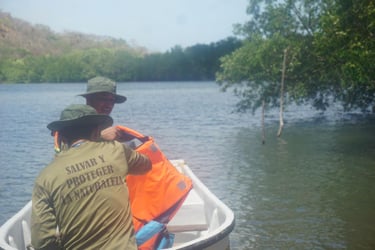
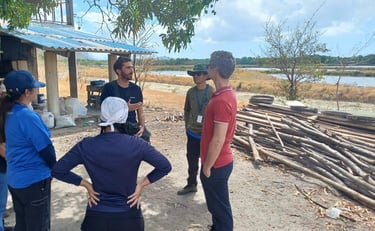
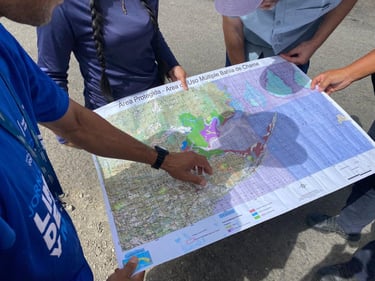
As part of the launch of the PAMAR, IPOS had the opportunity to visit the mangroves of Bahía de Chame with representatives from the Panamanian Ministry of Environment, including the Directorate of Coasts and Seas (DICOMAR), the Directorate of Climate Change (DCC), the Regional Directorate, and the Sistema Nacional de Areas Protegidas (SINAP).
Located along Panama’s Pacific coast, Bahía de Chame forms part of a vast and highly productive coastal wetland system within the Gulf of Panama.
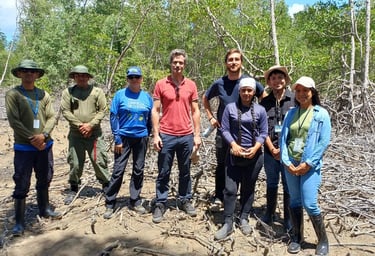
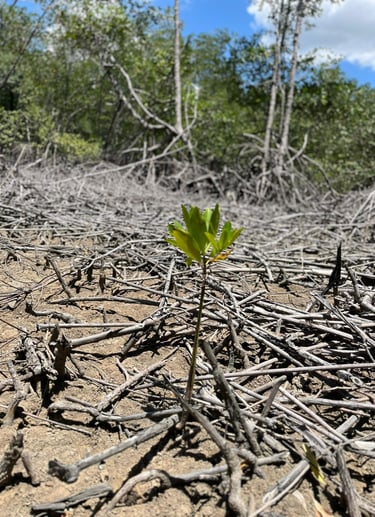
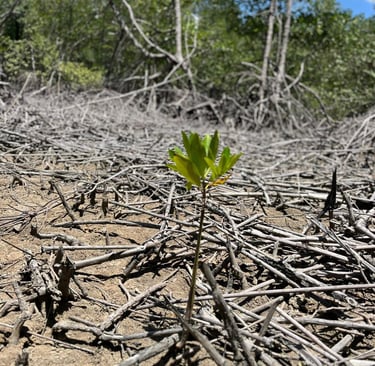
Its ecosystem creates ideal conditions for mangrove development, supports exceptional ecological richness, and serves as a critical nursery habitat for fish and mollusks that underpin local fisheries. It also provides refuge for a wide diversity of wildlife, including many migratory bird species.
Beyond biodiversity, Bahía de Chame delivers essential ecosystem services. Its mangroves act as natural defenses against coastal erosion, improve water quality by trapping sediments and pollutants, and play a key role in climate regulation through significant blue carbon storage.
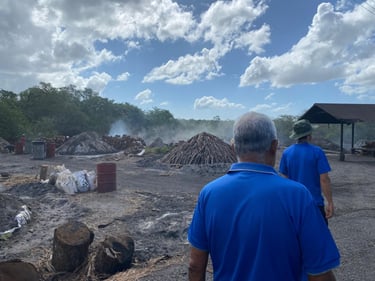
At the same time, Bahía de Chame illustrates the broader challenges facing mangroves in Panama, including pressures from coastal development, resource overuse, and pollution, as well as governance and regulatory complexities.
As we work to provide implementation pathways for the PAMAR Action Request, Bahía de Chame will be an ideal field study site and particularly relevant for strengthening collaboration across science, policy, and local communities.
PAMAR Hybrid Working Group Kick-Off
On 22–23 June 2026, the PAMAR Hybrid Working Group (HWG) officially launched its work during a two-day Kick-Off Workshop in Panama City. Bringing together the experts of the HWG, representatives of Panama’s Ministry of Environment and the IPOS project team, the workshop established a shared understanding of the main challenges surrounding mangrove governance in Panama and laid the foundations for the work to be carried out over the following months.
The workshop was complemented by a field visit to Chame Bay, allowing participants to connect the legal, institutional, ecological and socio-economic issues discussed during the working sessions with the realities of a key mangrove territory. The discussions and observations gathered during these two days subsequently fed into the preparation of PAMAR’s Preliminary Analysis


PAMAR participates in the 3rd International Congress “Mangroves of America” in Panama
In July 2026, the PAMAR project team and part of its Hybrid Working Group participated in the 3rd Congress “Mangroves of America” in Panama City, bringing the project into a broader regional dialogue on mangrove conservation, restoration and sustainable management.
During a side event dedicated to PAMAR, representatives of IPOS, Panama’s Ministry of Environment and experts of the Hybrid Working Group presented the Action Request, its objectives and working methodology, and discussed some of the key challenges facing mangrove governance in Panama. The Congress also provided an opportunity to exchange with scientists, practitioners, public authorities and organizations working on mangroves across the Americas, and to establish new connections that will contribute to PAMAR’s work over the coming months.


The Hybrid Working Group discloses PAMAR’s Preliminary Analysis
Find the Suggestion Box:


In August 2026, the PAMAR Hybrid Working Group released its Preliminary Analysis, a working document establishing a common knowledge base on mangrove governance in Panama, to guide the next stages of the Action Request.
Developed by the members of the HWG Core Team and reviewed and complemented by the relevant directorates of Panama’s Ministry of Environment, the analysis examines four main areas: the fundamental value of mangroves in Panama and the need to strengthen their governance; the current legal, institutional and scientific framework; the main regulatory, institutional, technical, scientific and socio-economic challenges and gaps; and the key orientations that will guide the HWG’s work and the development of PAMAR’s four main deliverables.
The Preliminary Analysis is intended as a working and scoping document rather than a final project output. Its publication is accompanied by an open Suggestion Box, through which stakeholders, partners, experts and other interested actors can contribute additional information, references, experiences and recommendations. These contributions will be carefully studied and considered by the Hybrid Working Group as its experts move into the next phase of its work, strengthening PAMAR’s participatory and whole-of-society approach.
Read the full Preliminary Analysis:
Join PAMAR as an Expert in its Hybrid Working Group
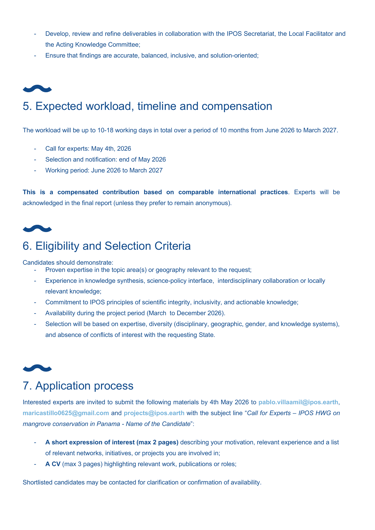
IPOS is assembling a Hybrid Working Group (HWG) composed of leading experts and knowledge holders from different disciplines and knowledge systems or with context-specific experience to prepare and validate the synthesis and outputs of this request.
Apply by May 4th, 2026
For inquiries related to the request or to propose avenues for collaboration, contact us at: